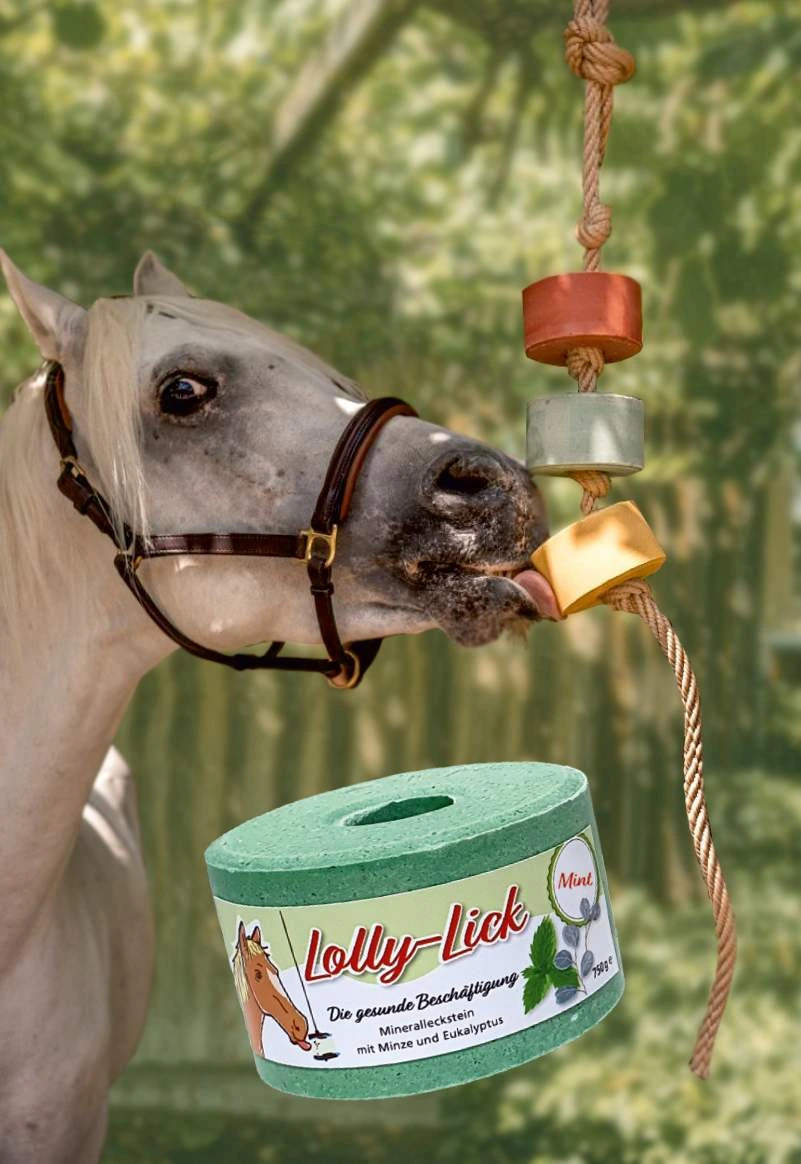
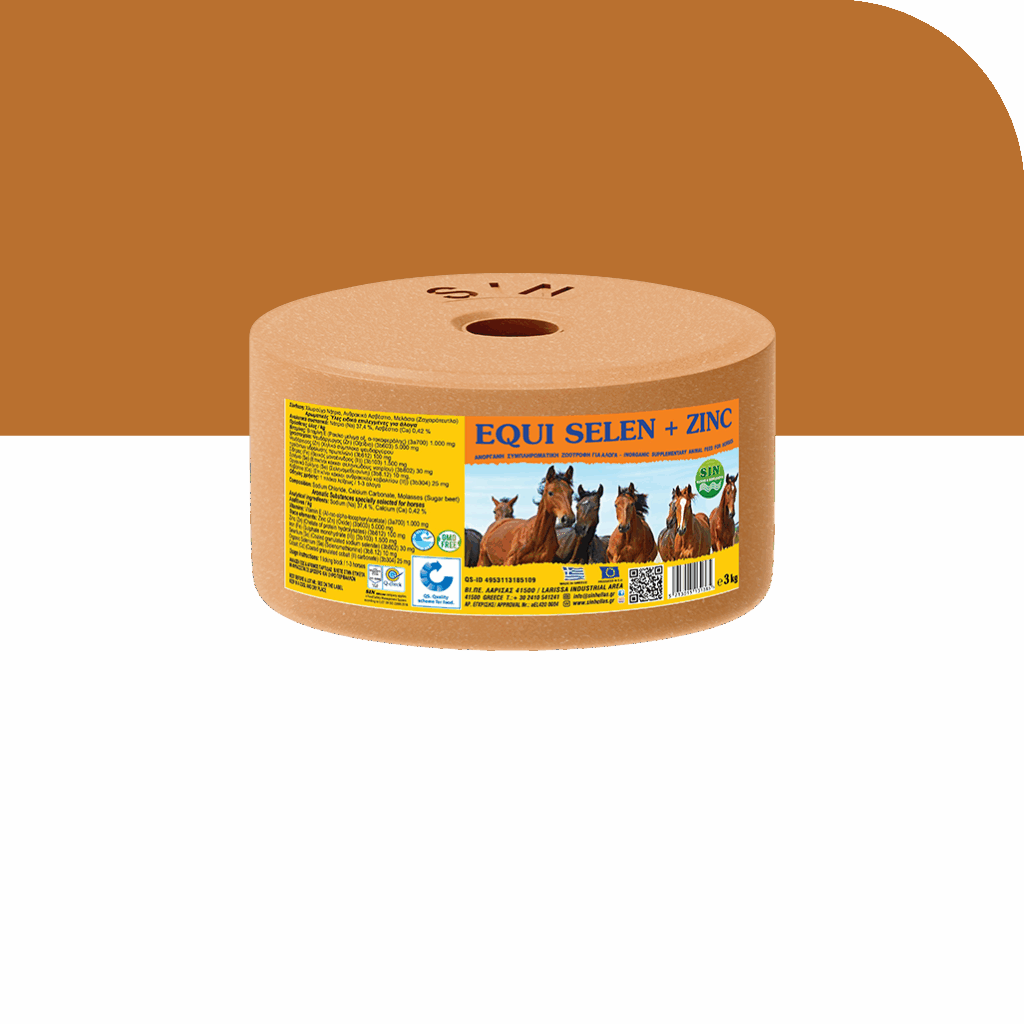
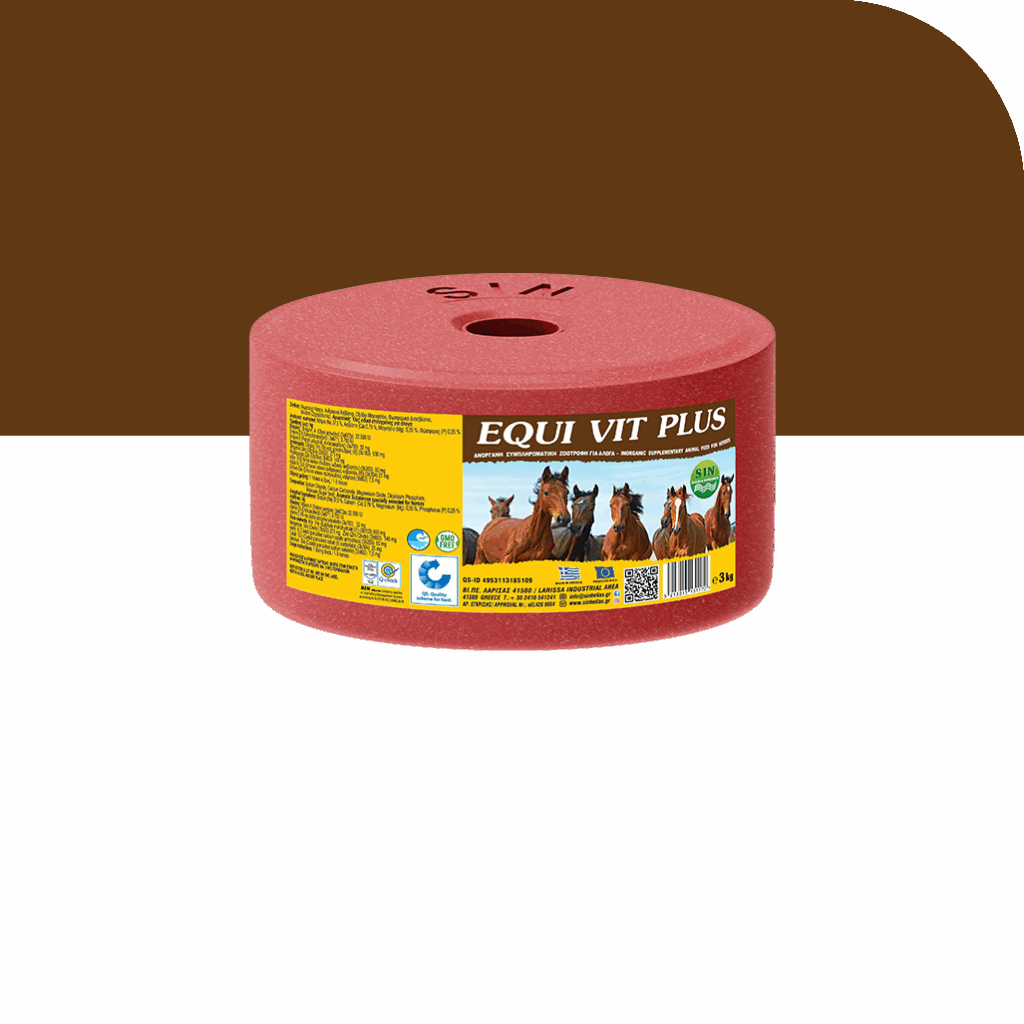
750 g blocks wrapped in plastic film in a box of 12pcs
LOLLY-LICK is a breakthrough in equine enrichment—a sugar-free, grain-free, long-lasting licking toy that keeps horses mentally stimulated, calm, and engaged.
Created for use in the stable, paddock, or open housing systems, it helps reduce boredom, restlessness, stress behaviors, and stable vices while providing your horse with beneficial nutrients.
Unlike traditional licking toys that contain sugars, molasses, or starch, LOLLY-LICK™ is made entirely without glucose or grain ingredients.
Instead, it is produced from:
Premium Mediterranean sea salt, naturally rich in iodine
Essential minerals & trace elements supporting metabolic balance
Vital vitamins for immunity and well-being
Natural botanicals (such as chamomile, rosehip, mint, etc.)
Absolutely no sugar, no molasses, no grains
This makes LOLLY-LICK ideal for:
Laminitic horses
Easy-keepers
Horses on low-sugar diets
Horses prone to metabolic disorders (EMS, PSSM, Cushing’s)
All horses needing safe enrichment without added calories
The unique hardness and natural salt composition encourage slow, controlled licking, helping:
Calm anxiety
Reduce stable stress
Prevent cribbing, chewing, and other stereotypic behaviors
Improve overall mood and relaxation
Provides horses with:
Electrolytes for hydration
Minerals & trace elements missing from regular forage
Vitamins supporting health and immunity
Gentle botanicals promoting internal wellness
Because LOLLY-LICK contains no sugars, no grain, and no molasses, it can be offered 24/7 without risk of:
Weight gain
Sugar spikes
Metabolic stress
Laminitic flare-ups
Analytical Ingredients / %
Sodium (Na): 36%
Calcium (Ca): 1%
Magnesium (Mg) : 0%
Phosphorus (P): 1%
Minerals mg / Kg
Iron (Fe) (Sulphate monohydrate (3b103) 930 mg: 50%
Manganese (Mn) (Oxide) (3b502) 273 mg: 10%
Zinc (Zn) (Oxide) (3b603) 145 mg: 5%
lodine (1) (Coated granulated calcium iodate anhydrous) (3b203) 60 mg: 4%
Cobalt (Co) (Coated granulated cobalt (II) carbonate) (3b304) 25 mg: 3%
Selenium (Se) (Coated granulated sodium selenite) (3b802) 7,5 mg: 2%
Sensory additives: Flavouring compounds 0,43%: 1%
Vitamins IU / Kg
Vitamin A (Retinyl acetate) (3a672a) 15.000 IU: 50%
Vitamin D3 (Cholicalciferol) (3a671) 2.500 IU: 10%
Vitamin E (All-rac-alpha-tocopherylacetate) (3a700) 21,3 mg: 1%
Sodium Chloride, Calcium Carbonate, Dicalcium Phosphate, Magnesium Oxide
Sugar-free mineral licks—such as those made primarily from sea salt, minerals, and natural plant ingredients—offer several realistic and scientifically grounded advantages over traditional glucose- or molasses-based licking toys.
While individual responses vary among horses, the following benefits are commonly observed or widely acknowledged in equine nutrition and behavior science.
Sweetened licks encourage faster consumption because horses naturally prefer sugary tastes.
A mineral-based lick without glucose or molasses:
Typically lasts longer
Encourages slower, more regulated licking
Reduces the likelihood of overeating
Helps avoid unnecessary calorie intake
This supports horses that need controlled diets, including easy keepers and those prone to weight gain.
Removing glucose and molasses from a lick eliminates an additional source of simple carbohydrates.
This can be especially helpful for horses:
With insulin sensitivity issues
Prone to laminitis
With Equine Metabolic Syndrome (EMS)
On low-sugar dietary programs
Sugar-free licks offer enrichment without interfering with dietary management.
Because horses do not “crave” a mineral lick in the same way they crave sugar:
They interact with the lick over a longer period
The lick becomes a stable source of enrichment
Chewing and biting behavior is generally reduced
Horses remain busy without quickly finishing the product
This helps support mental well-being and may reduce boredom-related behaviors.
While not a complete mineral supplement, salt- and mineral-based toys allow horses to express natural licking behavior and may help them self-regulate basic mineral intake.
This can contribute to:
Better hydration (salt encourages drinking)
Electrolyte balance during warm weather or training
Normal neuromuscular function
Although this should not replace a balanced diet, it can complement it.
Sugar-free licks contribute minimal energy to the diet, helping maintain appropriate body condition.
Sweetened licks, on the other hand:
Add non-structural carbohydrates (NSCs)
Can contribute to weight gain when used frequently
May cause fluctuations in energy levels in sensitive horses
Because sugar-free licks do not carry the same metabolic concerns as high-sugar ones, many owners feel comfortable leaving them in the stall or paddock without worrying about:
Spikes in sugar intake
Behavioral excitation
Rapid consumption
Disturbance of a low-sugar feeding regimen
This makes them a practical choice for long-term enrichment.
A sugar-free, mineral-based lick is often suitable for:
Horses on low-sugar therapeutic diets
Horses prone to laminitis
Horses with metabolic disorders
Overweight horses
Ponies (especially those with metabolic tendencies)
Horses in light work, where extra calories are not required
By comparison, sweetened licks are usually inappropriate for these categories.
If the formulation includes herbs (e.g., rosehip, chamomile), the toy may offer additional palatability or supportive effects, such as:
Mild digestive support
A calming sensory effect
Antioxidant plant compounds from natural ingredients
Again, effects vary per horse, but these components are well tolerated and widely used in equine nutrition.
Sugar-free mineral licking toys do not promise any miracle outcomes, but they provide a healthier, more controlled, and longer-lasting enrichment option for most horses—especially those that must avoid unnecessary sugar.
Their key advantages revolve around:
Behavioral enrichment
Diet safety
Controlled licking behavior
Practical longevity
Support of basic mineral intake
These benefits make sugar-free licks a valuable addition to modern, health-conscious equine management.
Whether in:
Sport stables
Breeding farms
Rehabilitation centers
Open herd systems
Private horse care
LOLLY-LICK™ provides a healthy, safe, and entertaining solution that enhances daily equine life—without compromising diet or metabolic health.
750 g blocks wrapped in plastic film in a box of 12pcs
Calcium
Calcium is the main component of bones and teeth. It has chief metabolic functions in the animal bodies and is also essential for muscle activity, skeleton, blood clotting, nerve transmission and dynamics of enzyme function. Calcium metabolism at calving is one of the most important animal health factors influencing the production, reproduction and feed conversion efficiency as it plays a major role in the absorption of nutrients (modification of the cell permeability).
Cobalt
Iron
Iron is essential for a wide variety of the metabolic processes of living organisms, due to its chemical transitional property. Iron is present in the different forms of heme and the iron-sulfur (Fe-S) cluster binding protein, which plays an important role in various enzymatic reactions such as aerobic respiration, TCA-cycle function and DNA synthesis as well as oxygen transport and storage. It is a substantial component of red blood cells participating to the blood’s structure and improves the functioning of organs and tissues.
Iodine
Zinc
Zinc is an essential nutrient for animals, functioning in enzyme systems and being involved in protein synthesis, carbohydrate metabolism, and many other biochemical reactions. Severe zinc deficiency causes numerous pathological changes, including skin parakeratosis, reduced or cessation of growth, general debility, lethargy, and increased susceptibility to infection.
Magnesium
Magnesium is needed for more than 300 biochemical reactions in the body. It helps to maintain normal nerve and muscle function, supports a healthy immune system, keeps the heartbeat steady, and helps bones remain strong. It also helps adjust blood glucose levels. It aids in the production of energy and protein, improves the digestibility of feed and improves the reproduction.
Manganese
Manganese is concentrated in the animal bones. It is an important cofactor for many enzymes involved in energy and protein metabolism. Mn is also required for mucopolysaccharide synthesis. This is a major component in the organic matrix of bones. Consequently, deficient animals have normal tendon growth but slow bone growth. This leads to symptoms such as perosis in chicks and crooked calf in other animals.
Sodium
Phosphorus
Phosphorus is very important for all animals for healthy muscles, bones and teeth development, steady digestion, healthy function of the energy metabolism and is an inevitable macro element for reproduction. Deficiency of Phosphor will cause the body to use up phosphor reserve in bone tissues as compensation, however if it isn’t replenished in a short period, issues will arise in all bodily functions and will cause the animals to eat objects with no nutritional value.
Selenium
Selenium is a component of glutathione peroxidase, an enzyme for the removal of lipid peroxides. Selenium is very important in fertility and helps muscular development. Se is also a component of two other selenoproteins. The midpiece of sperm requires selenoprotein. Microbes in the rumen replace S with Se in their S-containing amino acid synthesis. They are absorbed in the duodenum as amino acids. White muscle disease and exudative diathesis are two Se deficiency symptoms, which can be treated with both vitamin E and Se. Deficient animals also show liver necrosis. Selenium prevents oxidative damage to tissues by offering an antioxidant action and protects against cell damage.
Vitamin A
Vitamin A is necessary for support of growth, health and life of major animal species. In the absence of vitamin A, animals will cease to grow and eventually die. Vitamin A and its derivatives, the retinoids, have a profound influence on organ development, cell proliferation, and cell differentiation and their deficiency originates or predisposes animals to a number of disabilities.
Vitamin D3
Vitamin D the primary function of Vitamin D is to elevate plasma calcium and phosphorus to a level that will support normal mineralization of bone as well as other body functions. It is now realized that Vitamin D is not only important for mineralization and skeletal growth but has many other roles in regulation of the parathyroid gland, in the immune system, in skin, cancer prevention, in metabolism of foreign chemicals and in cellular development and differentiation.
Vitamin E
Vitamin E has been shown to be essential for integrity and optimum function of reproductive, muscular, circulatory, nervous, and immune systems. One of the most important functions is its role as an intercellular and intracellular antioxidant. Vitamin E is part of the body’s intracellular defense against the adverse effects of reactive oxygen and free radicals that initiate oxidation of unsaturated phospholipids and critical sulfhydryl groups.