Box of 4pcs x 5kg
5kg blocks wrapped in plastic film in box of 4pcs x 5kg
10kg block
Individually shrink wrapped 10kg block with handling strap.
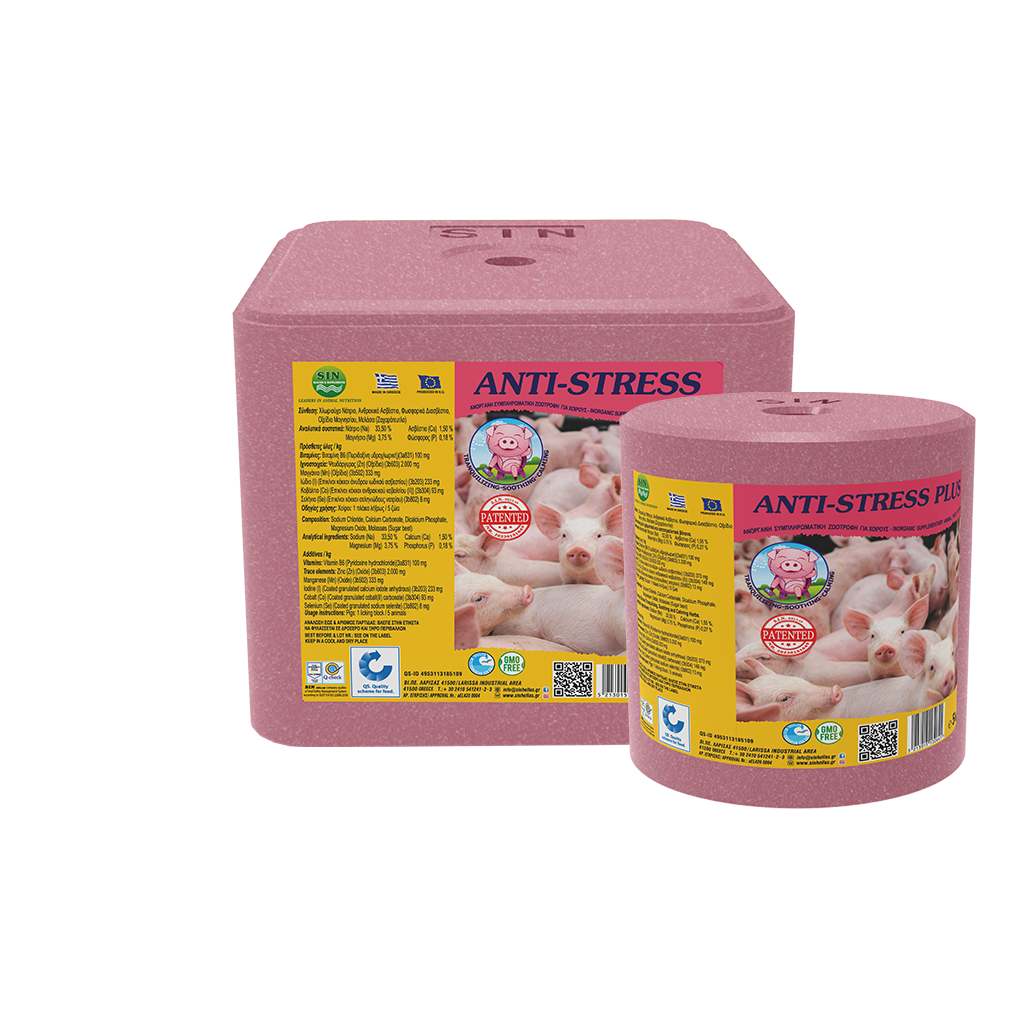
Anti Stress Plus is a herbal-based natural supplement formulated with a scientifically selected blend of tranquilizing, calming, and soothing herbs. It acts as a low-impact natural sedative, supporting the nervous system, reducing stress-related behaviors, and promoting mental well-being in pigs.
This supplement helps animals achieve profound relaxation, sound sleep, and a calm, serene state, while minimizing restlessness and agitation. It is particularly beneficial during gestation, stressful periods, or environmental challenges, supporting healthier pregnancies, stronger offspring, and overall robustness.
By promoting stress reduction, nervous system balance, and animal comfort, Anti Stress Plus contributes to enhanced immunity, improved reproductive performance, and optimal animal productivity.
Analytical Ingredients / %
Sodium (Na): 33%
Calcium (Ca): 1%
Magnesium (Mg) : 1%
Phosphorus (P): 1%
Minerals mg / Kg
Zinc (Zn) (Oxide) (3b603) 106.160 mg: 80%
Manganese (Mn) (Oxide) (3b502) 17.775 mg: 30%
lodine (1) (Coated granulated calcium iodate anhydrous) (3b203) 12.445 mgmg: 20%
Cobalt (Co) (Coated granulated cobalt (II) carbonate) (3b304) 4.975 mg: 10%
Selenium (Se) (Coated granulated sodium selenite) (3b802) 444 mg: 2%
Vitamins IU / Kg
Sodium Chloride,Calcium Carbonate,Dicalcium Phosphate,Magnesium Oxide,Molasses(Sugar beet), Specially chosen Tranquilizing,Soothing and Calming Herbs
Introduction:
Stress is a major welfare and productivity concern in pig production, leading to behavioral issues, impaired growth, reduced feed efficiency, and compromised immune function. Factors such as environmental changes, social hierarchy conflicts, handling, and transportation can activate the hypothalamic-pituitary-adrenal (HPA) axis, increasing cortisol levels and triggering restlessness, aggression, and other stress-related behaviors. Chronic stress also negatively affects reproductive performance, resulting in weaker offspring and lower litter weight.
Challenges:
Behavioral stress: Aggression, restlessness, and harmful social behaviors
Physiological stress: Elevated cortisol, reduced immunity, and impaired metabolism
Reproductive impact: Increased risk of complications during pregnancy and weaker offspring
Role of Herbal-Based Supplements:
Herbal-based nutritional supplements act as natural calming agents, providing tranquilizing and soothing effects. By supporting the nervous system and promoting relaxation, these supplements help pigs maintain behavioral stability, reduce stress-related agitation, and improve overall welfare.
Mechanism of Action:
These supplements influence the central nervous system, helping to regulate neurotransmitters that control anxiety, mood, and sleep. By reducing activation of the HPA axis, they lower stress hormone levels and promote a calm and balanced state in livestock.
Benefits Observed in Pigs:
Reduced aggression, restlessness, and stress-related behaviors
Improved sleep quality and overall calmness
Enhanced reproductive outcomes and healthier offspring
Strengthened immune function and resilience to stress
Support of overall animal well-being and contentment
Conclusion:
Stress in pigs is a multifactorial problem with serious implications for welfare and productivity. Incorporating herbal-based natural supplements into pig diets provides a safe, effective, and sustainable strategy to reduce stress, improve behavior, support reproduction, and enhance overall animal health.
Calcium
Calcium is the main component of bones and teeth. It has chief metabolic functions in the animal bodies and is also essential for muscle activity, skeleton, blood clotting, nerve transmission and dynamics of enzyme function. Calcium metabolism at calving is one of the most important animal health factors influencing the production, reproduction and feed conversion efficiency as it plays a major role in the absorption of nutrients (modification of the cell permeability).
Cobalt
Iron
Iron is essential for a wide variety of the metabolic processes of living organisms, due to its chemical transitional property. Iron is present in the different forms of heme and the iron-sulfur (Fe-S) cluster binding protein, which plays an important role in various enzymatic reactions such as aerobic respiration, TCA-cycle function and DNA synthesis as well as oxygen transport and storage. It is a substantial component of red blood cells participating to the blood’s structure and improves the functioning of organs and tissues.
Iodine
Zinc
Zinc is an essential nutrient for animals, functioning in enzyme systems and being involved in protein synthesis, carbohydrate metabolism, and many other biochemical reactions. Severe zinc deficiency causes numerous pathological changes, including skin parakeratosis, reduced or cessation of growth, general debility, lethargy, and increased susceptibility to infection.
Magnesium
Magnesium is needed for more than 300 biochemical reactions in the body. It helps to maintain normal nerve and muscle function, supports a healthy immune system, keeps the heartbeat steady, and helps bones remain strong. It also helps adjust blood glucose levels. It aids in the production of energy and protein, improves the digestibility of feed and improves the reproduction.
Manganese
Manganese is concentrated in the animal bones. It is an important cofactor for many enzymes involved in energy and protein metabolism. Mn is also required for mucopolysaccharide synthesis. This is a major component in the organic matrix of bones. Consequently, deficient animals have normal tendon growth but slow bone growth. This leads to symptoms such as perosis in chicks and crooked calf in other animals.
Sodium
Selenium
Selenium is a component of glutathione peroxidase, an enzyme for the removal of lipid peroxides. Selenium is very important in fertility and helps muscular development. Se is also a component of two other selenoproteins. The midpiece of sperm requires selenoprotein. Microbes in the rumen replace S with Se in their S-containing amino acid synthesis. They are absorbed in the duodenum as amino acids. White muscle disease and exudative diathesis are two Se deficiency symptoms, which can be treated with both vitamin E and Se. Deficient animals also show liver necrosis. Selenium prevents oxidative damage to tissues by offering an antioxidant action and protects against cell damage.